Common Causes of Water Leaks Under Slabs in New Orleans Homes
Discover the main causes of slab leaks in New Orleans homes, warning signs to watch for, and what property owners need to know about water leak repair.


Living in New Orleans means managing a unique combination of high water tables, shifting alluvial soils, and historic weather events. For local homeowners, one of the most stressful plumbing issues to encounter is a leak hidden beneath the concrete foundation. Understanding what triggers these under-slab failures helps property owners catch hidden issues before structural damage occurs.
Understanding Slab Construction in New Orleans
Most modern homes and commercial buildings throughout Orleans Parish are constructed on concrete slab foundations. Beneath this concrete pad lies a network of supply pipes—typically copper or PEX—that deliver pressurized water to fixtures throughout the property. When a pressurized line develops a breach beneath the concrete, it creates what is commonly known as a slab leak.
Because these pipes are encased in stone, dirt, and concrete, finding and fixing the problem requires specialized diagnostic techniques and professional intervention.
Primary Causes of Under-Slab Water Leaks
Slab leaks rarely happen without a distinct underlying cause. In the local environment, several environmental and mechanical factors commonly lead to pipe degradation:
1. Soil Movement and Foundation Settlement
New Orleans is built on deltaic soils that expand when saturated by heavy rainfall and shrink during dry summer periods. This constant ground movement places immense mechanical stress on rigid water supply lines running through or beneath the soil. As the slab shifts or settles unevenly, copper pipes can rub against abrasive sub-base materials, concrete, or rebar, eventually wearing a pinhole through the pipe wall.
2. Chemical Composition of Soil and Water
The local soil and municipal water supply can sometimes interact aggressively with metallic pipes. Over decades, electrochemical reactions can cause the exterior or interior walls of copper pipes to corrode. This process, known as pitting, thins the metal until water pressure forces a rupture.
3. High Water Pressure
Municipal water systems deliver water under significant pressure. If a home's pressure-reducing valve (PRV) fails, constant high water pressure places excessive strain on pipe joints, elbows, and soldered connections hidden beneath the floor. Over time, this continuous stress weakens the material until a leak forms.
4. Aging Plumbing Infrastructure
Many residential properties feature aging plumbing systems. Copper pipes installed decades ago have a finite lifespan, especially when subjected to the aggressive soil conditions found across the region. Older installations are far more prone to material fatigue and joint degradation.
Early Warning Signs of a Slab Leak
Because the pipes are buried beneath concrete and flooring, identifying a leak early requires paying attention to subtle household clues:
- Unexplained Spikes in Water Bills: A sudden increase in your municipal water utility bill without a change in consumption often indicates a continuous, hidden leak.
- Warm Spots on the Floor: If a hot water supply line ruptures beneath the slab, a specific area of tile, wood, or carpeted flooring may feel noticeably warm to the touch.
- The Sound of Running Water: Hearing the faint sound of water hissing or running when all faucets and appliances are turned off.
- Damp or Buckling Flooring: Wet spots appearing on carpets, warped hardwood planks, or lifting tile grout.
- Lower Water Pressure: A noticeable drop in pressure at showers, sinks, or tubs across the property.
Professional Detection and Repair Considerations
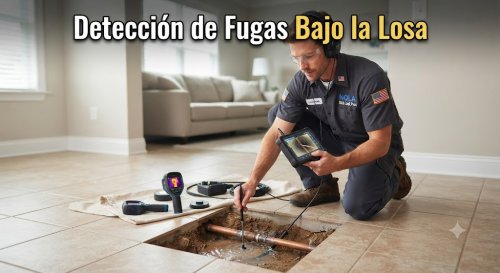
Pinpointing a leak beneath a concrete foundation requires advanced technology to avoid unnecessary destruction of flooring and slab surfaces. Professional plumbers utilize electronic acoustic listening devices, thermal imaging cameras, and helium gas testing to isolate the exact location of the breach.
Once the leak is located, repair options generally depend on the severity of the damage and the condition of the surrounding plumbing. Common approaches include direct spot repair through a small opening in the slab, rerouting the affected supply line overhead through the attic or walls, or complete repiping if the existing system shows widespread structural failure.
Preventative Maintenance Tips
While you cannot control local soil conditions, you can minimize your risk of catastrophic slab leaks by taking proactive measures:
- Monitor your water meter regularly for unexpected movement when all indoor and outdoor water sources are off.
- Install and maintain a reliable pressure-reducing valve to keep household water pressure within safe limits.
- Schedule periodic plumbing inspections, particularly if your property is more than thirty years old.
- Manage moisture levels around your foundation during extreme seasonal weather shifts to reduce severe soil movement.