{{ $json.selected_topic }} in New Orleans Homes
Master plumber guide to diagnosing, safely triaging, and repairing {{ $json.selected_topic }} in New Orleans properties.

Understanding {{ $json.selected_topic }} in New Orleans Properties
Addressing {{ $json.selected_topic }} requires a firm grasp of local infrastructure realities, structural hydraulics, and material limitations unique to the Crescent City. Whether managing an elevated Creole cottage in Faubourg Marigny or a slab-on-grade residence in Metairie, water behavior and drainage mechanics dictate how plumbing issues manifest and escalate. When dealing with {{ $json.selected_topic }}, homeowners must first identify the physical mechanism at play—be it pressure differentials, seismic soil shifts in high-water-table alluvial silt, or thermal expansion within aging metallic networks.
Diagnostic boundaries must be established early in any troubleshooting sequence. Is the anomaly isolated to a single fixture trap, is it a branch line restriction affecting a specific wet group, or does it originate from the main building sewer lateral as it transitions toward the municipal connection? Isolating these tiers prevents misdirected troubleshooting and limits unnecessary property disruption.
Overlooked Trade Secrets and New Orleans Environmental Factors
Standard national DIY guides often overlook the complex subterranean variables present across Orleans Parish and Jefferson Parish. High seasonal groundwater tables, continuous soil subsidence, and heavy clay content place intense external stress on underground piping networks. Furthermore, historic homes frequently feature outdated cast-iron or galvanized steel drain lines that have reached the end of their functional lifespans.
Consider the phenomenon of water migration: due to gravity runs along subfloor joists, water leaking from a second-story supply line or upper-level waste stack often surfaces far away from the actual point of failure, deceiving property owners. Similarly, temporary drainage improvements achieved via chemical drain openers or basic cable snaking often mask an impending structural issue, such as a root intrusion or a bellied clay lateral pipe. Vent stack restrictions—frequently caused by debris accumulation or bird nests in our humid climate—mimic physical drain clogs by creating airlocks that impede downward flow.
Safe Homeowner Triage vs. Dangerous DIY Boundaries
Before professional intervention is deemed necessary, homeowners can safely perform specific diagnostic steps:
- Locating Shutoffs: Identify both the primary indoor shutoff valve and the street-side water meter box curb stop (using a specialized meter key).
- Water Meter Audits: Monitor the low-flow dial indicator on the property water meter to confirm whether an active supply leak exists.
- Accessible Cleanouts: Visually inspect accessible outdoor and indoor cleanouts for signs of seepage without unthreading caps under pressure.
Explicit Warnings: Never unthread a sewer cleanout cap if water is actively backing up or gurgling, as sudden release under liquid head pressure can cause severe injury and property contamination. Avoid using corrosive chemical acid drain cleaners in vintage cast-iron systems, as exothermic reactions can crack brittle pipe walls. Never attempt to service gas flex lines or handle electrical panels in flooded crawlspaces or basements.
Diagnostic Comparison: Symptoms, Causes, and Professional Options
| Symptom Observed | Probable Root Cause | Recommended Action |
|---|---|---|
| Slow drainage across multiple fixtures | Main sewer line obstruction or vent stack blockage | Camera inspection and professional jetting or snaking |
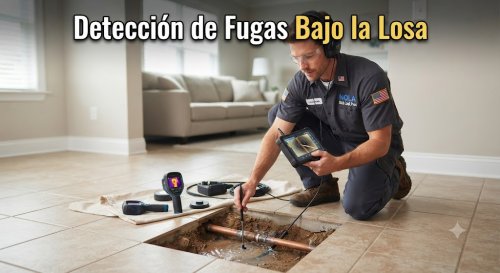
| Unexplained moisture on hardwood or tile | Subfloor supply line pinhole leak or condensation run | Static pressure test and non-invasive thermal imaging |
| Frequent foul odors near floor drains | Dry P-traps or cracked vent pipes allowing sewer gas entry | Trap priming and smoke testing of vent network |
| Sudden drop in household water pressure | Pressure regulator failure or municipal supply restriction | PRV diagnostic check and thermal expansion tank evaluation |
Realistic Repair Approaches and Decision Support
When addressing structural plumbing failures, repair methodologies vary based on accessibility and material degradation. Spot clamps or sleeve repairs offer temporary relief for isolated linear cracks, whereas sectional pipe replacements or trenchless cured-in-place pipe (CIPP) lining provide long-term solutions for compromised underground runs. In historic New Orleans properties resting on pier-and-beam foundations, crawlspace accessibility simplifies physical access, while slab-on-grade construction requires precise concrete penetration or trenchless alternatives.
Pricing and project scope are heavily influenced by local permit requirements, municipal utility line clearances, and accessibility constraints. Evaluating whether to repair a localized section or execute a comprehensive repiping project depends on the overall wall thickness and structural integrity of the remaining infrastructure.
Frequently Asked Questions
How does the high water table in New Orleans affect underground drainage pipes?
Saturated alluvial soils exert continuous hydrostatic pressure on underground pipes. When combined with ground movement and heavy vehicle traffic, this pressure can shift joints in older cast-iron or clay pipes, leading to misalignment, infiltration of groundwater, and subsequent root intrusion.
Why do my drains gurgle when the washing machine discharges?
Gurgling typically indicates an inadequate venting system or a partial obstruction in the branch drain. When a large volume of water rushes down, it creates a negative pressure vacuum that pulls air through nearby fixture traps, producing the characteristic gurgling sound.
Can I use chemical drain cleaners on historic cast-iron pipes?
No. Highly caustic chemical drain cleaners generate extreme heat and chemical reactions that accelerate the corrosion of vintage cast-iron pipe interiors, often resulting in sudden structural wall failure and catastrophic leaks.
What is the difference between static water pressure and dynamic flow rate?
Static pressure measures the force of water within the system when no fixtures are operating. Dynamic flow rate measures the volume of water delivered when multiple fixtures are running simultaneously. A drop in dynamic flow often points to mineral scale buildup or undersized supply piping.
How do I know if my sewer line requires trenchless repair or full excavation?
A high-definition sewer camera inspection is required to evaluate the interior wall condition, structural alignment, and degree of damage. Trenchless lining is viable when the pipe structure remains largely intact, whereas severe collapses or structural bellies require traditional excavation and replacement.